
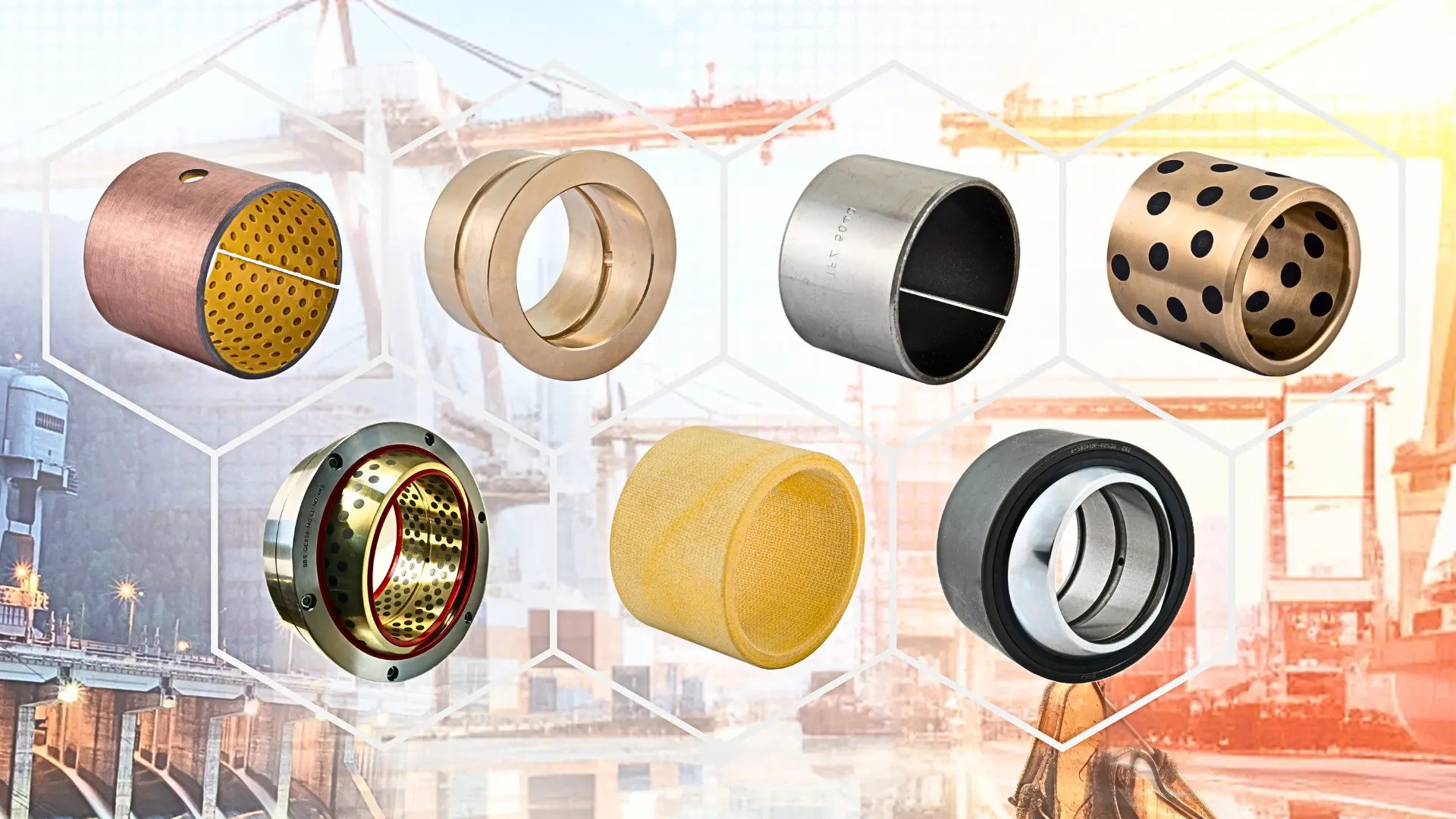
Bearings hold a vital role in ensuring the smooth operation of rotating machinery through preventing excessive wear, reducing friction between two parts.
There are many types of bearings. Selecting the right type of bearing depends heavily on operating factors like operating temperature, speed and load!
Journal bearing designs focus on load capacity, rotational speed as well as shaft radius, housing dimensions and operating conditions. They can be used in relatively low-speed applications in varied high-demand circumstances.
What type of journal bearings are there? How can I recognise which is appropriate for my machinery?
This article explores why journal bearing / plain bearing technology remains a top choice across industries. Let’s dive into the world of journal bearings together and discover why SBS – Singa Bearings Solutions®️ offers only the best solutions!
What are Journal Bearings / Plain Bearings?
Journal bearings, also known as plain bearings, sliding bearings or sleeve bearings, support a rotating shaft through a cylindrical bearing surface. They are an older and more basic type of bearing, but still prominent in industrial applications! The shaft (or journal) rotates freely in a supporting sleeve or bearing shell, not requiring any rolling elements. A bearing shell is the actual physical, replaceable insert that lines the inside of the bearing housing.
Unlike ball bearing designs that rely on rolling elements, a plain journal bearing operates mainly using grease lubrication to reduce the friction, making them highly efficient under the right conditions.
Why Journal Bearings? / Benefits of Journal Bearings
Journal bearings offer a vast array of benefits, from quieter operation and reduced vibration to significantly less wear and tear, all of which contribute to longer lifespans for your machinery. With their simple, no-fuss design and impressive durability, journal bearings stand out as a cost-effective solution that engineers trust across a wide range of industries, from heavy-duty machinery to high-performance equipment and customised solutions.
When it comes to journal bearings, bearing speed is also important. When engineers talk about bearing speed, they usually refer to the physical limits of how fast a bearing can rotate before it fails due to heat, vibration or centrifugal force.
Journal bearings are an excellent choice when your application requires handling of high loads. Their ability to distribute loads evenly across a larger surface area makes them exceptionally reliable in challenging environments, helping to prevent premature failure and reduce maintenance requirements. This makes journal bearings a smart choice for achieving long-term durability, lowering operational costs. This superior load distribution makes them the premier choice for heavy equipment applications.
In the past decade, a rising demand of maintenance-free materials using little to no grease can be observed, especially in marine/offshore applications. This is due to a growing consciousness of the environment and call to go green. With an increasing environmental concern over grease pollution in water, industries are seeking to prevent hazardous runoff and thus, eliminating risks of grease leaks. In short, eco-friendly self-lubricating bearings help marine operators comply with strict environmental regulations while maintaining peak performance.
Rolling element bearings are great for high speeds while journal bearings are suited for slow rotations and oscillating movements. To operate efficiently and minimise friction, journal bearings rely on a precise balance between load and speed.
Journal Bearing Applications
As mentioned before, journal bearings are ofben used in a variety of industrial applications: hydraulic cylinders, oscillating movements in machines like a bucket and boom movement on an excavator. From mining equipment to marine propulsion, these versatile sliding components keep heavy industries moving efficiently.
They are optimal for shock loads due to a higher surface area between the shaft and the bushing. As such, they have great shock distribution in absorbing impact loads. Journal bearings are also easier to customise in small quantities!
Common Challenges and Journal Bearing Solutions
Grease-lubricated bearings
In heavy-duty industrial applications, journal bearings are continuously exposed to harsh environments with dust, dirt and water factors threatening to destroy internal components. This runs the risk of mechanical wear and operational downtime. Deploying high-quality grease-lubricated journal bearings creates an effective barrier against external contaminants.
Grease-lubricated journal bearings do not leak easily and are highly beneficial if shock loading occurs. They provide a thicker lubricant than oil and protect against vibration whilst supporting static loads.
Maintenance-Free Bearings
In many modern applications, traditional grease maintenance might prove impractical or prohibited. For example, under Australian Commonwealth and state legislation, discharging any amount of “oil or oily mixture” into state or marine waters is a strict liability offence that carries heavy penalties. As such, maintenance-free bearings are greatly suitable. Switching to maintenance-free composite bushings eliminates the environmental liability of grease runoff.
In remote or hazardous locations, such as offshore wind turbines, manually re-greasing bearings are also incredibly costly, dangerous and sometimes physically impossible. Maintenance-free bearings eliminates these logical and environmental barriers by removing external greasing.
Ball Bearings / Roller Bearings vs Journal Bearings
When selecting the right bearing for industrial applications, there is often debate on journal bearing systems versus rolling element bearings like ball bearings or roller bearings.
Journal bearings perform well in unfriendly environments and support extended operational lifespans and uptimes.
While ball bearings or rolling element bearing designs support high rotational speeds, journal bearings have limited load carrying capabilities in when compared to sliding bearings. In applications requiring high load capacities, this type of bearing is the better pick over ball bearings due to their larger contact surface. By pairing this massive contact area with a thick, heavy-duty grease lubricant, the overall load carrying ability of the system can also be drastically enhanced.
The point-contact design of ball bearings / roller bearings make them unsuitable for heavy, high-load applications. Additionally, they are highly vulnerable to contamination, corrosion and improper lubrication. These ball bearings / roller bearings are also susceptible to premature failure when subjected to high-impact, shock or vibrating loads. As such, ball bearings / roller bearings can cause fatigue and surface cracking.
Journal bearings also handle shock loading far better than ball bearings or angular contact ball bearings, thanks to their continuous surface contact and fluid damping. The absence of rolling elements results in less vibration and noise, especially important in low speed machinery where stability around critical applications is essential.
Thrust Bearings and Journal Bearings
In many rotating machines, a journal bearing is paired with a thrust bearing to fully support the rotating shaft. While the journal bearing handles radial loads and stabilises shaft rotation, the thrust bearing is designed to carry axial loads acting along the shaft’s axis, often in one direction or sometimes both depending on the design.
Lubrication Methods for Journal Bearings
Effective lubrication methods are essential for journal bearing performance. Optimising your bearing lubrication system directly translates to reduced downtime and lower energy consumption.
Grease-lubricated journal bearings are a time-tested solution for heavy-duty applications. These types of bearings are typically utilised in low-speed or intermittent operating conditions! In grease-lubricated journal bearings, the grease cannot flow freely on its own like liquid oil due to oil viscosity. Due to its thickness, these journal bearings rely on a well-designed grease groove system on the inner diameter (ID) of the bearing to ensure the grease lubricant is distributed to the whole area of the contact surface.
The support of embedded solid lubricants within journal bearings also help in securing lubrication even if grease lines fail.
SBS’s Plain Bearing / Journal Bearing Solutions
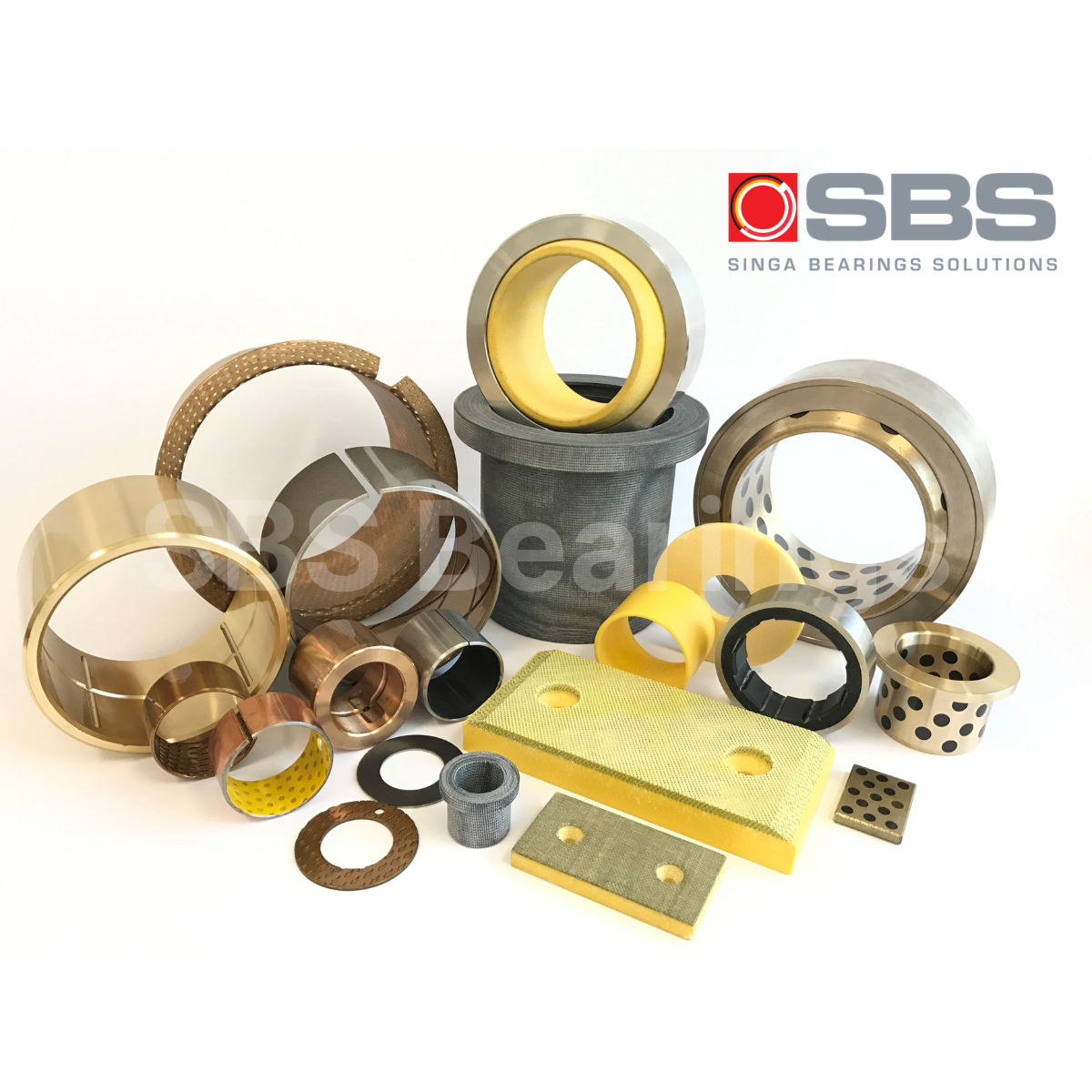
While types of bearings vary widely, the plain journal bearing continues to prove its value across industries. Its ability to support shaft rotation with minimal wear and operate efficiently at slow rotational speeds makes it a superior choice in many demanding applications.
SBS offers journal bearing solutions designed to maintain stable operating conditions, minimise wear, and deliver consistent, reliable performance even in the most demanding industrial environments. By combining proven engineering principles with modern analysis, SBS ensures each solution is tailored to meet the specific needs of the application. The reduces downtime and optimises system reliability.
View SBS’s bearing catalogue here: https://sbs-bearings.com/
The SBS Bearings Difference

We pride ourselves on being more than just a bearing supplier, acting as a technical partner throughout the entire project lifecycle. From initial concept and design through to production, delivery, and installation, SBS Bearings collaborates closely to ensure every detail is considered and refined. Our team brings both qualitative expertise and quantitative analysis to the table, diving into real performance metrics to inform decisions and validate outcomes.
Read more about our above and beyond service here: https://sbs-bearings.com/above-and-beyond-sbs-bearings
This data-driven approach, combined with hands-on industry experience, allows us to provide practical but innovative journal bearing solutions that deliver real results and long-term value.
Contact SBS for Journal Bearings / Plain Bearings Today!
Curious and want to learn more about SBS’s journal bearings? Contact us now at info@sbs-bearings.com.sg .
Please note: we do not offer ball bearings.